Hardwood Floor Refinishing
Sand back to raw wood, fix what moved, and lay a finish built for a real household — pets, kids and Kansas City winters included.
Learn moreInstallation
A hardwood floor fails for boring reasons: wood that was not acclimated, a subfloor that was not flat, or fasteners spaced to save time. We spend the effort where it does not show, because that is where floors are actually won or lost.
Build your quoteHow we approach it
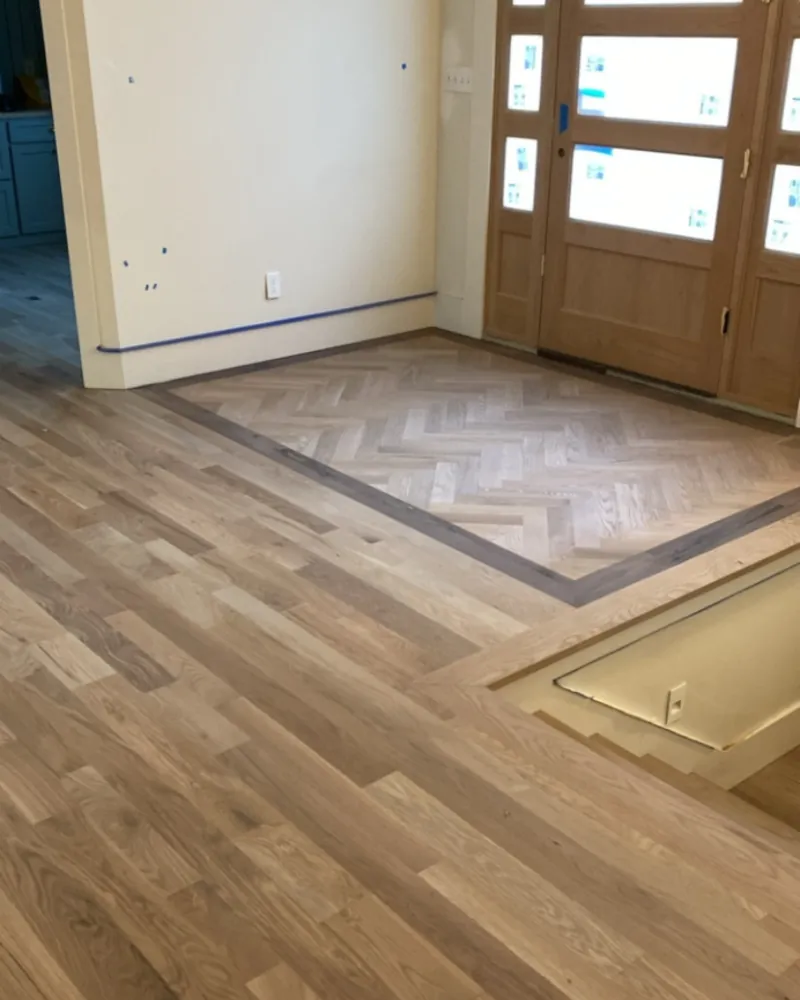
Kansas City humidity swings hard between August and January. Wood moves with it. Boards that go down at the wrong moisture content gap in winter or buckle in summer — and the floor looked perfect on install day, which is why nobody connects the two.
So the wood sits in your house before it goes down, with the HVAC running the way you actually live. We check moisture in the boards and the subfloor before starting, not as a formality.
Subfloor prep is the other half. Flattening, fastening down squeaks, and correcting height at doorways and appliances happens before the first board, because none of it can be fixed afterward.
What your quote covers
Everything here is priced into the written estimate you approve before we start — not added to the invoice afterward. What changes from one floor to the next is what it needs and what you choose.
Is this the right service?
What it costs
Most installs are $2 to $4 per square foot for labor. What moves that number is the floor itself — board width and length, glued or nailed, prefinished or unfinished. The wood or LVP and the supplies that go with it are yours to buy, which keeps the bigger half of the budget in your hands.
Most projects start around 300 sq ft. Whatever your floor turns out to need, you get the whole thing in writing before we start.
Get your rangeCommon questions
Solid hardwood can be refinished many times and lasts generations, but it moves with humidity and should not go below grade.
Read the full answerWood expands and contracts with the moisture in the air around it. Boards delivered from a warehouse are not at the same moisture content as your house.
Read the full answerSometimes it works, sometimes removing the old floor is the better call — we do both, depending on your project.
Read the full answerUsually not. Heated indoor air in winter is dry, wood gives up moisture, and boards shrink. The gaps typically close again in summer.
Read the full answerAlso from us
Sand back to raw wood, fix what moved, and lay a finish built for a real household — pets, kids and Kansas City winters included.
Learn moreWater damage, cupped boards, squeaks and gaps repaired in place — without tearing out a floor that still has life in it.
Learn moreVacuum-extraction sanders, plastic over the room, and cleanup of the areas we worked in — on every job, at no extra cost.
Learn more